
Winter fall prevention for seniors: the fix table
| Hazard | Fix | Source | RoomMend tag |
|---|---|---|---|
| Ice on the front steps | Clear walkways with an ice melt product or sand. | NIA, 2024 | Slippery surface |
| Hand off the railing | Use the railing on icy stairs and walkways, every time. | NIA, 2024 | Handrail or grab bar |
| Smooth-soled slippers by the door | Nonskid, rubber-soled, low-heeled shoes. No socks or smooth slippers on stairs. | NIA, 2022 | Something else |
| Shovel waiting for Dad | Avoid shoveling yourself: NIA cites both fall and heart-attack risk. Book a neighbor or service. | NIA, 2024 | Something else |
| Loose rug inside the door | Remove loose throw rugs. | MedlinePlus, 2024 | Loose rug |
| Dark hallway | Night lights in hallways and rooms that can be dark. | MedlinePlus, 2024 | Too dark |
Rows you found in the game turn green. The "RoomMend tag" column is the quick-note chip we would use to log it.
How can seniors prevent falls in winter?
To prevent winter falls, start at the front door: clear ice with melt or sand, hold the railing, wear nonskid rubber-soled shoes, let someone else shovel, and keep the inside of the entrance free of rugs and dark corners. That is the National Institute on Aging's cold-weather advice (2024) joined to MedlinePlus's indoor list (2024).
Why the doorway? It is where wet boots meet a smooth floor, where the steps freeze first, and, since the clocks went back on November 1, 2026, where the walk home now happens in the dark. The CDC reports that about 1 in 4 adults 65 and older report a fall each year.
Start the winter check where ice, wet boots and the dark meet: the front door.
What it looks like in RoomMend
How to run a winter walkthrough in 3 steps
- Walk the entrance after dark, in their shoes. Front steps, railing, door mat, the first ten feet of hallway. RoomMend's entrance and stairs walkthroughs ask the questions, each with where the guidance comes from.
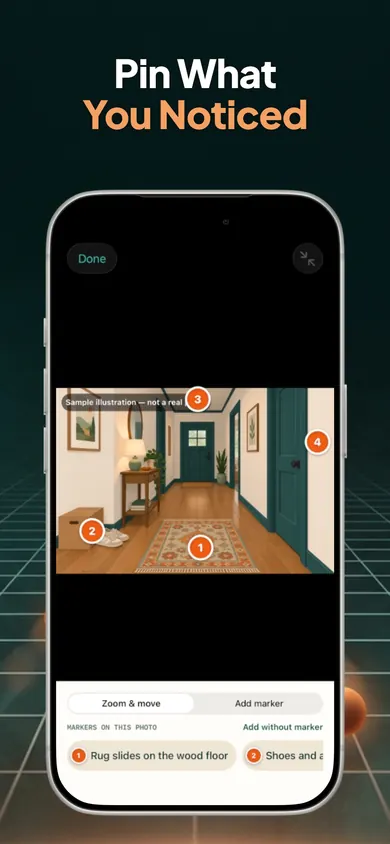
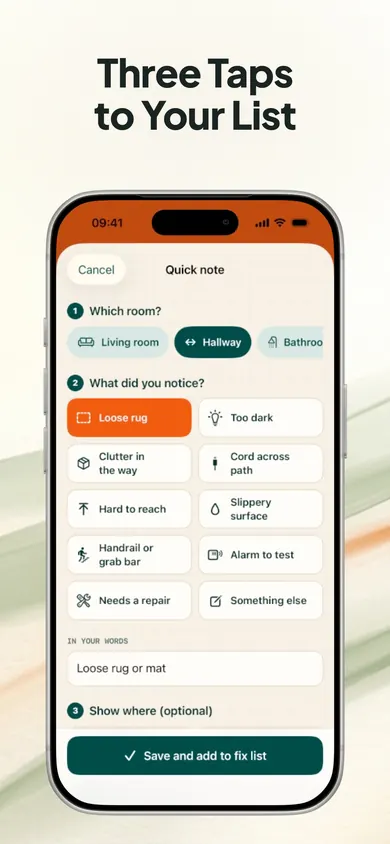
- Log each find in three taps. Room, issue, This week. Add a photo marker on the exact spot of ice or the rug edge.
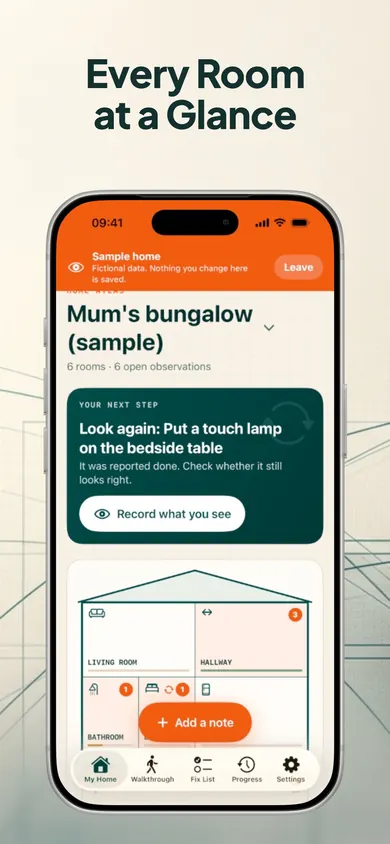
- Tick it, then look again. When a fix is done, RoomMend plans a reminder 30 days later. In winter, that is the second snow.
Honest limits: RoomMend does not detect hazards in photos and is not a fall-risk assessment. It does not know the weather. The walkthroughs, fix list, reminders and room PDFs are free; RoomMend Plus is a one-time purchase for extras like more homes and the whole-home binder.
The second snow (a story we wrote)
In early December, a daughter visits for the weekend and runs the hunt on her own phone first, then walks the real steps with her father at 5 PM. Same list: ice by the bottom step, slippers by the door, the shovel he insists on using. She logs three fixes. The neighbor's son takes the shovel job for the season.
Thirty days later, on the Monday after the second snow, RoomMend reminds her to look again. She calls instead of driving: "Is the sand bucket still by the door?" It is. That reminder is the whole reason we built the recheck: fixes quietly slip back.
Winter fall questions
How can seniors prevent falls in winter?
Keep steps and walkways clear with ice melt or sand, use railings on icy stairs, wear nonskid rubber-soled low-heeled shoes, and avoid shoveling snow yourself, according to the National Institute on Aging (2024). Inside, remove loose throw rugs and add night lights, per MedlinePlus.
What shoes are best for older adults in winter?
NIA recommends nonskid, rubber-soled, low-heeled shoes, and advises against walking on stairs or floors in socks or smooth-soled slippers (NIA).
Should an older adult shovel snow?
NIA suggests avoiding it where possible, because shoveling carries both a fall risk and a heart-attack risk (NIA, 2024). Line up a neighbor, a relative or a paid service before the first snow.
How common are falls in older adults?
The CDC reports that about 1 in 4 adults 65 and older report a fall each year, and falls are the leading cause of injury death in that age group (CDC, using 2020 to 2024 data).
What temperature should an older adult keep the house in winter?
At least 68°F, according to the National Institute on Aging, which warns that 60 to 65°F homes can lead to hypothermia in older adults.
Is the hazard hunt a real safety check?
No. It is a 20-second game to train your eye. A real check means walking the actual entrance, ideally in the dark and in the shoes your parent wears. RoomMend helps you write down what you find; it does not judge safety for you.
Make it a habit with RoomMend
One walk at the door, a short fix list, a recheck after the next snow. RoomMend on the App Store.

Updated November 2026. Sources: National Institute on Aging, MedlinePlus (NIH), CDC. General information, not medical advice. Talk to your clinician about fall risk.
Related
- RoomMend: a room-by-room home safety checklistA room-by-room home safety checklist for your home or a parent's: note what you notice in three taps, plan the fix, recheck in 30 days.
- What to do after an elderly parent fallsYour parent fell at home. What to do in the first hour, the first week and the first month, with a free fix-plan calculator for their rooms.
- Where to get a free home safety assessment for seniorsWho offers free home safety assessments for seniors: fire and EMS programs, Area Agencies on Aging, repair nonprofits, plus a check to do tonight.
- Holiday home safety check for parentsHome for the holidays? Walk six spots in a parent's house, front step to night route, with CDC and NIA checks and a 10-minute fix for each.