

What should you check in a parent's home over the holidays?
Check the six places a fall is most likely to start, front step, hallway, stairs, bathroom, bedroom and kitchen, at the time of day they really use them, and fix the cheapest problem before you leave. The holidays are often the one long visit of the year, and they arrive in the darkest weeks, with extra cords, bags and visitors in the house.
The stakes are real. According to the CDC's older adult falls facts (reviewed September 2026), more than one out of four older people falls each year, and fewer than half of them tell their doctor. So you may be the first person to notice anything at all.
This is general information, not medical advice. Talk to your clinician.
The holiday visit, step by step
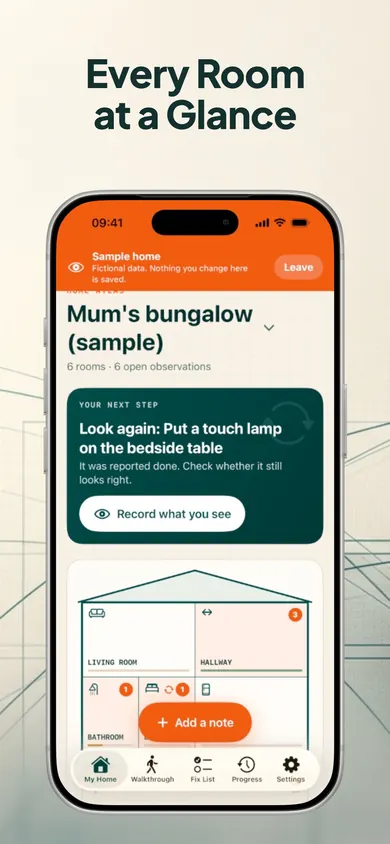
Four steps, one afternoon. The screenshots are the app we make for keeping the notes; the checks themselves come from the CDC and the National Institute on Aging and work on paper too.
- 1
Walk in the front door like it's 5 p.m. in December
Arrive after dark once, or turn the lights off and come in from the car. NIA suggests turning the porch light on at night and checking that steps to the front door are not broken or uneven.
- 2
Do the night route with them, slowly
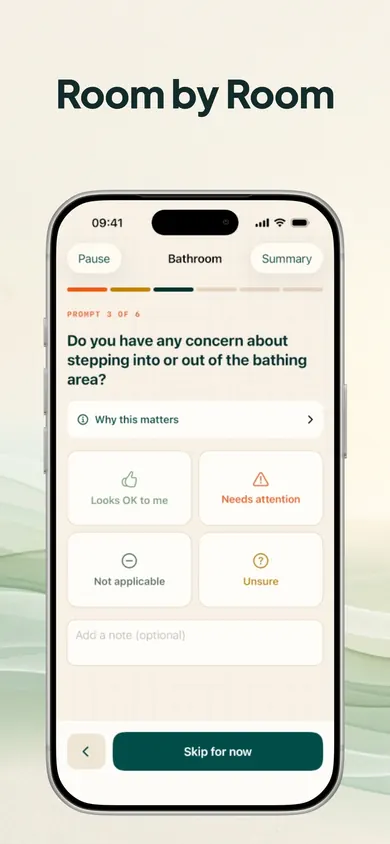
Bed to bathroom and back, lights the way they would really be at 3 a.m. The CDC checklist asks two questions here: is the light near the bed hard to reach, and is the path dark?
- 3
Note it in three taps, photo optional
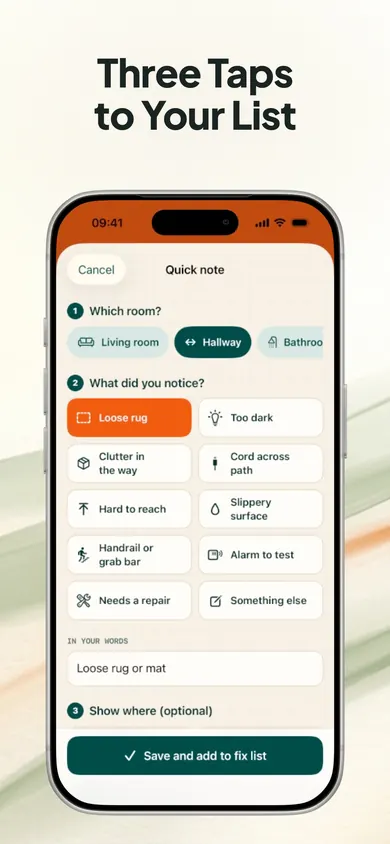
Choose the room, tap what you noticed (Loose rug, Too dark, Cord across path, Hard to reach), pick This week, This month or Someday. Add a photo and mark the spot if a sibling needs to see it.
- 4
Leave with one fix done and one assigned
Do the cheapest fix before you go. Assign the rest: who, by when. RoomMend tracks each fix from To review to Planned to In progress, then plans a reminder to look again in 30 days.
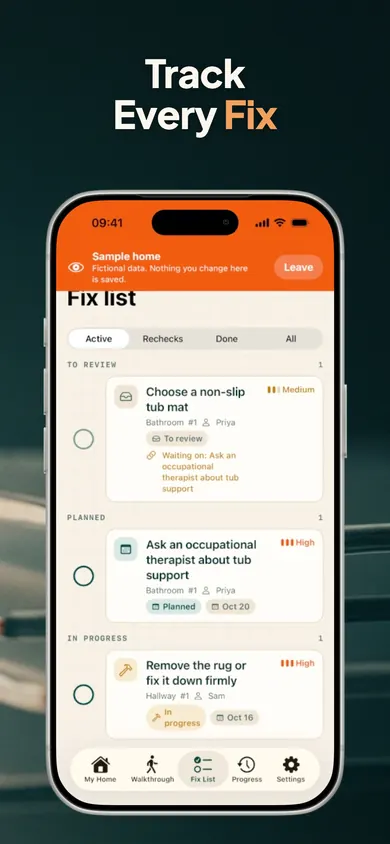
Arrive as a guest, walk the house like it's 3 a.m., leave with one fix done.
Seasonal home safety checks the holidays add
| What the season brings | Which check it touches | Fix before you leave |
|---|---|---|
| Dark by late afternoon | Stair lights and switches; porch light (NIA, reviewed 2022) | Brighter bulbs; porch light on before dusk |
| Lights, trees, extension cords | Cords across walkways (CDC checklist, 2017) | Run cords along walls, away from the night route |
| Guests' shoes, bags, gifts | Objects on floors and stairs (CDC checklist) | One drop zone that is not the hallway or stairs |
| Big meals, high cupboards | Often-used things on high shelves; a sturdy step stool | Platters and roasting pan down to waist height |
| Extra baths for visitors | Wet surfaces; grab bars, not towel racks (MedlinePlus, 2026) | Non-slip mat in the tub and outside it |
Honest limits of a holiday check
- One visit is a snapshot. What you see in December may not be what they live with in March. That is why RoomMend plans a look-again reminder 30 days after each fix.
- The house is one part of four. The CDC's prevention steps (reviewed 2026) also include asking a provider to evaluate fall risk, a medicine review with a doctor or pharmacist, and an eye check at least once a year.
- RoomMend is a notebook, not an inspector. It does not detect hazards in photos and is not a home inspection or fall-risk assessment. "Reported completed" means someone said the work was done.
- Who should pick something else: if your parent already has an occupational therapist's written plan, follow that. If they do not use an iPhone and you will not be the one tracking fixes, the CDC's printable checklist is enough.
One design decision we made: every RoomMend walkthrough question shows why it is asked and which public source it comes from, so a parent can see it is the CDC asking about the bathroom, not their son.
Holiday visit questions
What should I look for when visiting elderly parents for the holidays?
Walk the route they use every day: front step, hallway, stairs, bathroom, bedroom and kitchen. The CDC's checklist asks about rugs, cords and clutter on the floor, lights and handrails on stairs, support in the tub and at the toilet, and a dark path from bed to bathroom.
How do I bring up home safety without upsetting my parent?
Ask what they find awkward before you point anything out, and fix one thing together the same day. A lamp moved to the bedside is a favor; a list of ten problems is an inspection.
Are holiday decorations a fall risk?
They can add exactly what the CDC checklist asks about: cords across walkways and objects on the floor and stairs. Run cords along walls, keep stairs clear of gifts and bags, and put extension leads away from the night route.
Which fix matters most if I only have one afternoon?
Light and the night route. The CDC suggests more or brighter bulbs, and the National Institute on Aging suggests night lights and light switches close to the bed. Both are cheap and take minutes.
Should I tell their doctor about anything I notice?
If you notice unsteadiness or a recent fall, yes, with your parent's agreement. The CDC says fewer than half of older people who fall tell their doctor, and suggests asking a provider to evaluate fall risk and review medicines.
Is RoomMend a home inspection?
No. RoomMend organizes your own notes and plans room by room. It does not detect hazards in photos and is not a safety certification or fall-risk assessment. For electrical, structural or mobility concerns, ask a qualified professional.
Updated November 2026