
How much math and reading practice do kids need over winter break?
About ten minutes on most days is enough to keep math and reading skills warm over a two-week winter break, as long as it mixes review with a little new material and leaves real rest days. That is our suggestion, not a rule from a study. It is short on purpose: the plan that survives the holidays is the one nobody has to fight about.
Keep it warm, not hot. Ten minutes, most days, then go play.
Who this plan, and Brainy Bucks, is not for
- Kids who need real catch-up in a skill their teacher flagged. Ask the school for specific practice; a ten-minute routine is maintenance, not tutoring.
- Teens past Grade 8. Brainy Bucks content stops there, and it is deepest from Kindergarten to Grade 4.
- Families who want no screen at all over break. Skip the app days in the plan; the kitchen, store and clock days work alone.
- Anyone wanting a formal assessment. Brainy Bucks skill statuses come only from answers given in the app and are not a test score.
A mini story: the 27th of December
By the third day of break, the new toys are less new and everyone is on top of each other. A seven-year-old asks for "just one more show." Instead, there is a deal on the fridge: one quest after breakfast earns Brainy Bucks toward a reward the parent chose, like twenty minutes of a favorite show or picking dessert.
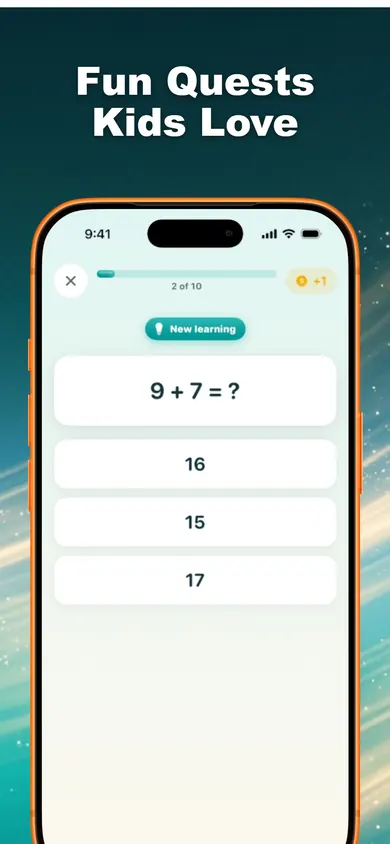
The quest takes about ten minutes. She gets 9 + 7 wrong, gets a clue, tries again, gets it. Two days later the same kind of question comes back, and this time she does not need the clue. Nobody said the word homework.
The reward was the parent's idea. The app just keeps the score honest.
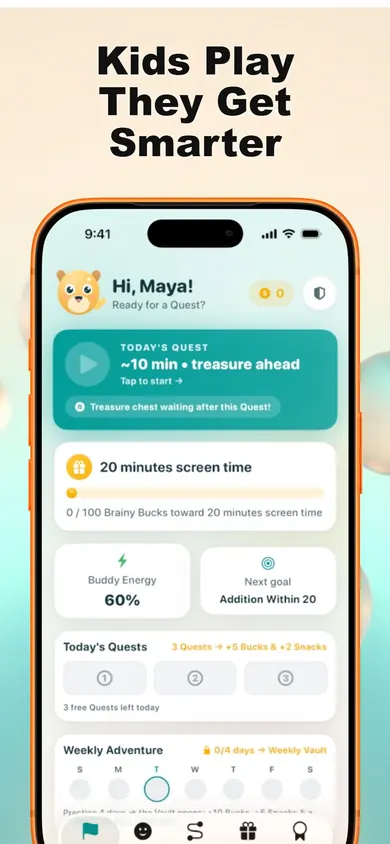
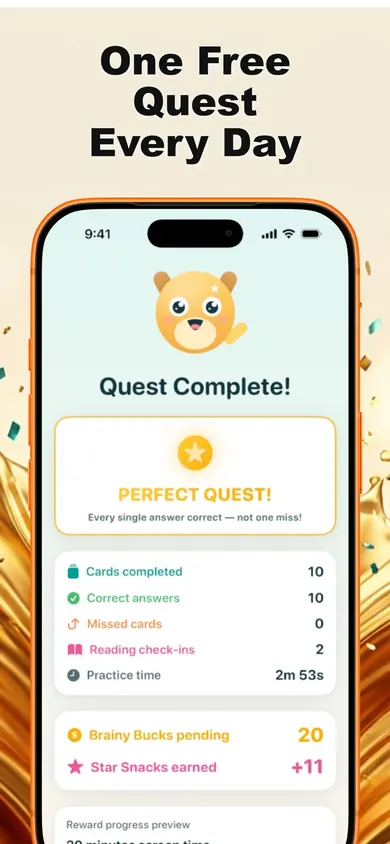
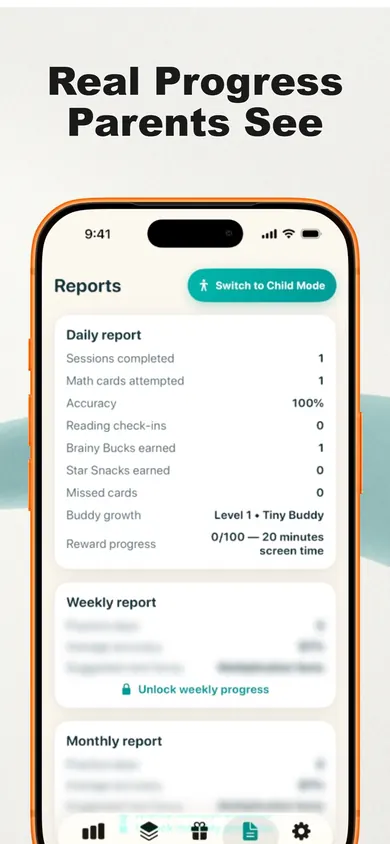
What the app looks like over break
The 10-day winter break practice plan
Two weeks of break, ten practice days, four days off. Swap days around freely; the order matters less than the rhythm.
- Day 1
Pick the time
After breakfast, 10 minutes. Same spot each day.
- Day 2
Math in the kitchen
Double a recipe or halve it. Fractions and measuring.
- Day 3
One quest
A 10-minute mixed quest of new skills and review.
- Day 4
Read aloud swap
They read one page, you read the next.
- Day 5
Off
Rest days keep it from feeling like school.
- Day 6
Store math
Let them hold the receipt and check the change.
- Day 7
One quest
Mistakes from day 3 come back for another try.
- Day 8
Clock reading
When does the movie start? How long until dinner?
- Day 9
Story sequencing
Retell a holiday film in 5 events, in order.
- Day 10
Look back
Ask what got easier. Read the weekly summary.
Three app days, five real-life days, two rest days. That mix is the point.
What the myth cards add up to
If you flipped all five cards above, you have the whole philosophy of this plan: the break is short, short practice spread out works better than a marathon, real life is full of math and reading, mistakes are the most useful thing to repeat, and fun is allowed. Everything in the ten-day plan comes from those five flips.
One design decision we made in Brainy Bucks follows the fourth card. There are no lives lost and no red X. A wrong answer gets a clue and a second try, missed questions come back in later quests, and skills that went well are checked again days later to see whether they stuck.
How it works in 3 steps
Set the quest length
Today's Quest can be 5, 10 or 15 minutes. Over break, pick 10.
Set one real-life reward
You create and price it in Brainy Bucks; it is redeemed only with your parent PIN. One reward is free.
Read the weekly summary
A one-sentence summary of what was practiced, plus up to three suggestions for next week. Accept, replace or postpone any of them.
Winter break practice options compared
| Holiday worksheet packet | Real-life math and reading | Brainy Bucks | |
|---|---|---|---|
| Cost | Often free to print | Free | Daily quest free; Plus optional |
| Adapts to your child | No | You adapt it | Yes, to their answers |
| Mistakes come back later | No | If you remember | Yes, spaced review |
| Parent effort | Print and check | High, but fun | Low; read the summary |
| Works offline | Yes | Yes | Yes |
Use the free ones. Add the app for the days you need ten quiet minutes.
Winter break practice questions
How much should kids practice over winter break?
There is no official number. We suggest about 10 minutes on most days, mixing a little math and a little reading, and leaving holidays themselves free. Short, regular sessions are easier to keep than one long catch-up session.
Do kids really fall behind over winter break?
Research has focused on summer, not winter. A 2023 Brookings analysis by NWEA researchers found that scores flatten or drop on average over summer, more in math than reading, but said the size is still uncertain. A two-week break is much shorter, so treat practice as keeping skills warm, not as an emergency.
What are good screen-free winter break math activities?
Use what the holidays already give you: count change at the store, double a recipe, read the oven timer, measure gift wrap, compare prices. These cover money, time, measurement and fractions without a worksheet.
Is Brainy Bucks free over the holidays?
Yes for the core. One adaptive Today's Quest is free every day with no time limit, plus 3 extra quests a day, hints, second tries, spaced review and the weekly summary. Brainy Bucks Plus is optional and adds unlimited quests, the full practice library and more reports.
Which grades does Brainy Bucks cover?
Content spans Pre-K to Grade 8, with the deepest coverage from Kindergarten to Grade 4. Difficulty adapts to the answers your child actually gives.
Does it work on a long car trip without Wi-Fi?
Yes. The listing says it works offline, and read-aloud runs on the device too.
Set up day one tonight
No accounts, no ads, nothing sold to children. Open Brainy Bucks in the App Store and pick a 10-minute quest.

Updated November 2026
Related
- How to get your child to practice math every dayA parent's first-week plan for daily math practice: same time, small dose, mistakes welcome. Day by day, with what to say and what to skip.
- Brainy Bucks: a math and reading app for kidsA math and reading app for kids from Pre-K to Grade 8: one free adaptive quest a day, a weekly plan for parents, no ads, no accounts.
- Free math tutoring for kids: 5 mistakes to skipLooking for free math tutoring for your child nearby? Five mistakes parents make, the free help many libraries offer, and a weekly-minutes calculator.
- Free math and reading apps for kindergarten, comparedFive kindergarten math and reading apps checked against their App Store listings, November 2026: what free really includes and who should pick which.