
How do you get a child to practice math every day?
Make it small, make it the same time every day, and make mistakes cheap: five minutes after a fixed daily cue, sitting nearby, with a second try for every wrong answer. Start smaller than feels useful. The goal of week one is not better math; it is a child who sits down on Day 8 without a negotiation.
That matches the best-known habit research for families. In a 2009 UCL study, Phillippa Lally and colleagues found a new behavior took an average of 66 days to become automatic, and that missing one opportunity did not significantly affect the process. So one rough Tuesday does not undo the week.
Honest limits, first
- An app is not a teacher. If your child is far behind, anxious about math, or you suspect a learning difference, talk to their teacher. Daily practice helps; it does not diagnose.
- Brainy Bucks' skill statuses are not a formal assessment. They come only from the answers given in the app.
- The deepest coverage is Kindergarten to Grade 4. Content runs from Pre-K to Grade 8, but older kids will find less depth.
- Some parts cost money. One adaptive quest a day plus 3 extra quests is free. Unlimited quests, the full library and more reports are Brainy Bucks Plus.
Small, same time, mistakes welcome. That is the whole method.
Daily math practice questions parents ask
How many minutes of math practice a day is enough?
Short and steady usually beats long and rare. Brainy Bucks lets you choose a 5, 10 or 15-minute quest; for a young child or a reluctant one, start at 5. A habit is easier to grow from a small dose than to rescue from a big one.
What time of day is best for math practice?
The time you can repeat. Attach it to something that already happens every day, like after breakfast or right after the backpack comes off. UCL researchers found that missing one day did not significantly hurt habit formation, so a stable cue matters more than perfect attendance.
My child cries or refuses. Should I push?
Shrink the task before you push. Offer two choices (now or after snack; 5 minutes or 10), sit beside them for the first few days, and stop on a win. If refusal is constant or tied to anxiety about math, talk to their teacher.
Should I reward daily math practice?
Small, predictable rewards help some children; others do fine with a sticker or praise. In Brainy Bucks, rewards are earned by practicing, real-life rewards are ones you create and price, and they are redeemed only with your parent PIN. Nothing is sold to children.
How long until daily practice becomes a habit?
Longer than one week. A 2009 UCL study by Phillippa Lally and colleagues found it took an average of 66 days for a new behavior to become automatic. The first week is about making it easy to repeat, not about results.
Is Brainy Bucks free?
One adaptive Today's Quest is free every day with no time limit, plus 3 extra quests a day, hints, second tries, spaced review and the weekly summary and learning plan. Brainy Bucks Plus (monthly, yearly or lifetime) adds unlimited extra quests, the full practice library, more reports and Family Plus for up to 4 children.
Does it replace math homework?
No. Think of it as the warm-up lap, not the race. Homework comes from your child's teacher; daily practice keeps facts and skills from going cold between lessons.
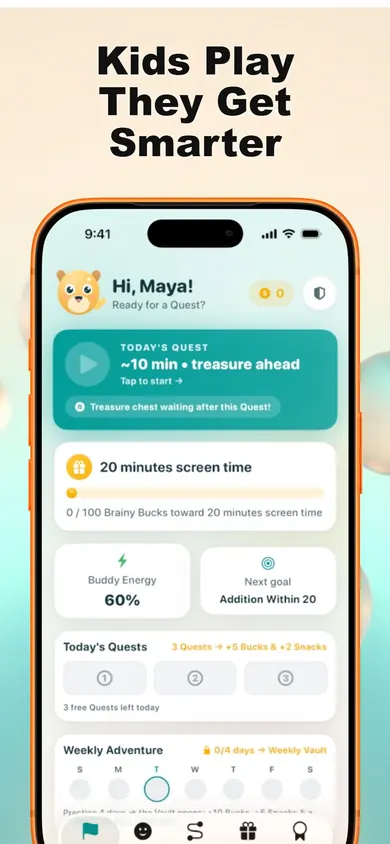
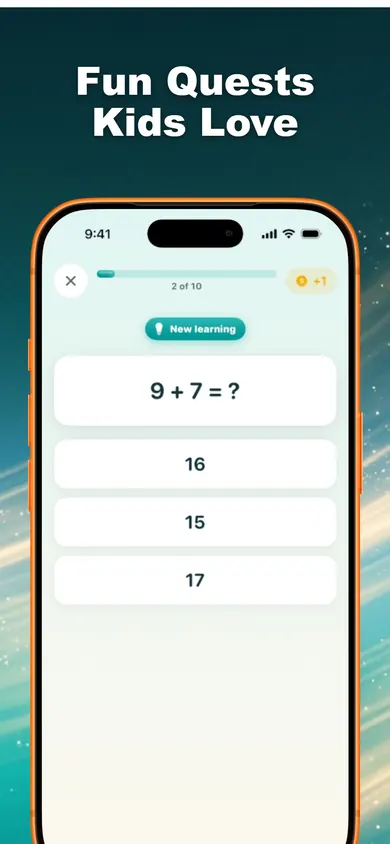
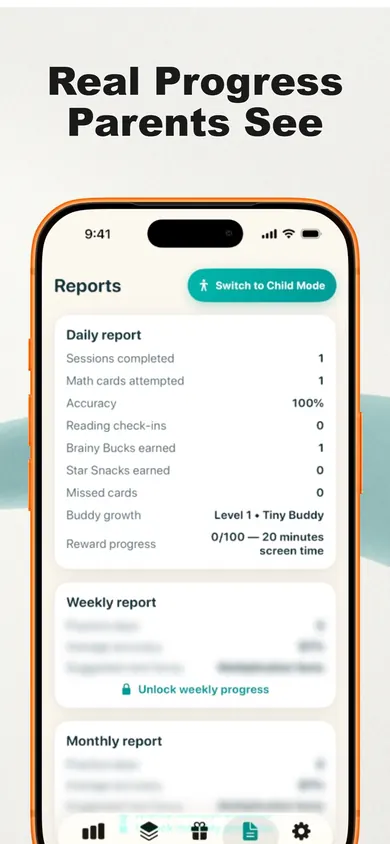
What the first week looks like in the app
A mini story: the kitchen timer
A dad of an eight-year-old tried a 30-minute math block every Saturday. It lasted three Saturdays and ended in tears twice. He swapped it for five minutes right after breakfast, Monday to Friday, with him drinking coffee at the same table and not helping unless asked.
By Thursday his daughter asked for the 10-minute quest because she wanted the treasure chest at the end. By Friday she had missed the same subtraction fact three times, and the app kept bringing it back in later quests. On Sunday he read one sentence about what she had practiced, and they counted coins at the shop instead of opening the app at all.
Thirty minutes once a week lost to five minutes every morning.
Ways to build a daily math habit, compared
Worksheets
Cheap and screen-free. You do the marking, and every wrong answer becomes a conversation.
Flashcards
Fast for facts. Gets dull by Day 4 for many kids; no built-in review of misses.
Everyday math
Counting change, measuring for baking. The University of Chicago's Becoming a Math Family activities are a good free source.
Brainy Bucks (we make it)
5, 10 or 15-minute quests that adapt, bring misses back later, and read questions aloud. No ads, no accounts.
Who should pick something else: if you want zero screen time on school days, use worksheets plus one everyday-math moment a day. The first-week plan above works just the same.
How it works in 3 steps
- Set it up together. Pick a Brain Buddy and a real-life reward you price yourself. Child Mode shows no prices or purchase buttons.
- One quest at the cue. Today's Quest mixes new skills, review and earlier mistakes. Choose 5, 10 or 15 minutes.
- Read your weekly summary. One sentence on what they practiced, and up to three short suggestions you can accept, replace or postpone.
One design decision we made: there are no lives and no red X. A wrong answer gets a clue and a second try, because a child who dreads being wrong will find a reason not to sit down on Day 2.
Start Day 1 tomorrow morning
Pick the cue tonight. Five minutes is enough.

Make it a habit with Brainy Bucks
Updated November 2026
Related
- Brainy Bucks: a math and reading app for kidsA math and reading app for kids from Pre-K to Grade 8: one free adaptive quest a day, a weekly plan for parents, no ads, no accounts.
- Winter break math and reading practice, 10 minutes a dayA 10-minute-a-day winter break math and reading plan for kids, with five myths flipped. For parents who want practice without the worksheet fight.
- Free math tutoring for kids: 5 mistakes to skipLooking for free math tutoring for your child nearby? Five mistakes parents make, the free help many libraries offer, and a weekly-minutes calculator.
- Free math and reading apps for kindergarten, comparedFive kindergarten math and reading apps checked against their App Store listings, November 2026: what free really includes and who should pick which.