
Where can you find free math tutoring for kids near you?
The closest free math tutoring is often already in your house: many public libraries offer free live online tutoring with a library card, and your child's school may run free help sessions; pair either with a short daily practice at home. A tutor fixes a concept. A daily habit keeps it.
Honest limits, before the list
- We cannot see your library. Which tutoring service your library offers, and its hours, differs by place. The example below is one library system; check yours.
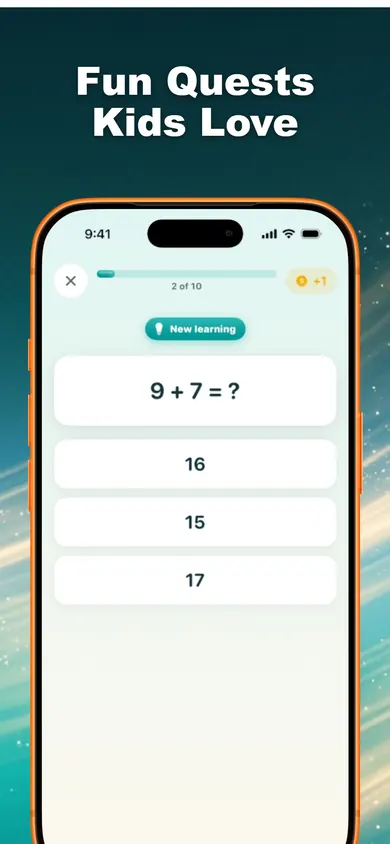
- We make Brainy Bucks. It is a practice app, not a tutor. No person reviews your child's answers. Its skill statuses come only from answers given in the app and are not a formal assessment.
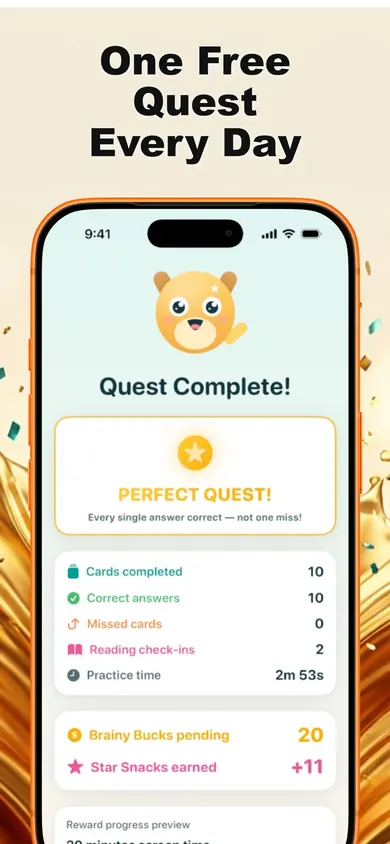
- Free has a ceiling. One adaptive quest plus 3 extra quests a day is free. Unlimited quests, the full library and longer reports are Brainy Bucks Plus.
5 mistakes parents make looking for free math tutoring
1Driving across town for help the library already pays for
Fix: Many public libraries subscribe to live online tutoring that cardholders use free, from home. Alameda County Library's March 2026 post describes Brainfuse HelpNow as free with a library card, for elementary through college, in math, reading, writing and more. Check your library's website for 'homework help' before you search further.
2Booking one long session for a daily problem
Fix: If your child is slow on addition facts or times tables, an hour on Saturday will not fix it as well as five minutes a day. Use tutor time for the concept they do not get yet; use short daily practice for speed and memory.
3Skipping the teacher
Fix: The teacher knows which unit is coming, which skill is shaky, and whether the school runs free help sessions. One email ('What should we practice at home?') often saves weeks of guessing.
4Mistaking a 'free trial' for free
Fix: Some tutoring and practice services are free for a few days, then charge. Read what renews and when. We follow the same rule: Brainy Bucks' free tier is one quest a day, forever; Plus is a paid subscription or lifetime option, and the app says so.
5Measuring by hours, not by repeats
Fix: A UCL study (Lally and colleagues, 2009) found new habits took an average of 66 days to become automatic, and missing one day did not significantly matter. Count how many days a week your child practices, not how long one session lasted.
Use free tutoring for the concept and ten minutes a day to keep it.
Free math help options, side by side
| Option | Best for | Cost | Watch out for |
|---|---|---|---|
| Library live tutoring (e.g. Brainfuse HelpNow) | Stuck on tonight's homework | Free with a card, where offered | Not every library has it; hours vary |
| School help sessions | Matching what class is covering | Free | Schedules; ask the teacher |
| Khan Academy | Videos and practice by grade | Free (nonprofit) | Needs an adult to set the path for younger kids |
| Everyday math at home | Number sense, no screen | Free | Easy to forget without a routine |
| Brainy Bucks (ours) | Short daily practice, review of misses | 1 quest a day free; Plus is paid | Not a tutor; iPhone only |
For the screen-free row, the University of Chicago's Becoming a Math Family activities are written for parents and need only things you already own.
What your calculator result means
The calculator in the header multiplies days by minutes and stretches it over a 36-week school year. The number is not the point; the pattern is. Five days of 10 minutes adds up to more practice than one hour a week and, more usefully, gives your child 180 chances a year to sit down without a fight. If you picked 1 hour once a week, that is a good shape for a tutor session, and a poor shape for remembering times tables.
Who Brainy Bucks is not for
- A child who needs a person tonight. Use library live tutoring or ask the teacher. An app cannot ask "show me how you got that".
- High schoolers. Content stops at Grade 8 and is deepest from Kindergarten to Grade 4.
- Families with no iPhone or iPad. Use Khan Academy or paper practice instead; the mistakes list above still applies.
One design decision we made: a wrong answer gets a clue and a second try, and missed questions come back in later quests. No lives, no red X. A child who expects to be told off will not open it tomorrow.
A mini story: the Thursday library card
A mom of a fourth grader spent two weeks searching for free math tutoring near her, and found tutoring centers with waitlists and paid trials. Her son's teacher mentioned, in passing, that the county library had live tutors online. She had a library card in a kitchen drawer.
That Thursday he logged in with a tutor about long division, the thing he did not understand. The next morning, and every school morning after, he did a ten-minute quest before the bus, which kept bringing back the division facts he had missed. The tutor handled the why. The habit handled the remembering.
Free math tutoring questions
Where can I find free math tutoring for my child?
Start with three places: your child's teacher (many schools run free help sessions), your public library (many offer free live online tutoring with a library card, such as Brainfuse HelpNow), and free practice sites like Khan Academy. Availability varies by school and library, so ask or check your library's website.
Is library online tutoring really free?
Where a library offers it, yes, for cardholders. Alameda County Library, for example, describes Brainfuse HelpNow as free with a library card, covering elementary to college students in math, reading, writing and more. Check your own library; not every system subscribes.
How often should a child see a math tutor?
It depends on the gap. A tutor is best for concepts your child does not understand yet. For facts and fluency, short daily practice usually matters more than a longer weekly session. Ask the teacher which one your child needs.
Can a math app replace a tutor?
No. An app is good for repetition and spaced review; a person is better at spotting why a child is stuck. Many families use both: a tutor or teacher for the hard concept, a short daily practice for keeping it.
Is Brainy Bucks free?
One adaptive Today's Quest a day is free, with 3 extra quests, hints, second tries, spaced review and a weekly parent summary. Brainy Bucks Plus (monthly, yearly or a one-time lifetime option) adds unlimited extra quests, the full practice library, more reports and up to 4 child profiles.
What grades does Brainy Bucks cover?
Content spans Pre-K to Grade 8, with the deepest coverage from Kindergarten to Grade 4. Difficulty adapts to the answers your child actually gives.
Find the tutor. Then keep the habit.
Check your library tonight, and start a ten-minute quest tomorrow.

Open Brainy Bucks in the App Store
Updated November 2026
Related
- Brainy Bucks: a math and reading app for kidsA math and reading app for kids from Pre-K to Grade 8: one free adaptive quest a day, a weekly plan for parents, no ads, no accounts.
- How to get your child to practice math every dayA parent's first-week plan for daily math practice: same time, small dose, mistakes welcome. Day by day, with what to say and what to skip.
- Winter break math and reading practice, 10 minutes a dayA 10-minute-a-day winter break math and reading plan for kids, with five myths flipped. For parents who want practice without the worksheet fight.
- Free math and reading apps for kindergarten, comparedFive kindergarten math and reading apps checked against their App Store listings, November 2026: what free really includes and who should pick which.