
Why does my child keep forgetting math facts?
Most children forget math facts because they practiced them in one long burst and then didn't retrieve them for days; short practice spread across the week, starting with a quick quiz on older facts, is what research guidance recommends instead.
That guidance comes from a federal practice guide, Organizing Instruction and Study to Improve Student Learning (Institute of Education Sciences, 2007). Its first recommendation is to space learning over time (moderate evidence). Another is to use quizzes to re-expose students to key content (strong evidence). Neither says "practice longer".
Forgetting isn't failure. It's the signal that a fact is due again.
Honest limits
- Brainy Bucks is a practice app, not a tutor or a diagnosis. Skill statuses come only from answers given in the app and are not a formal assessment.
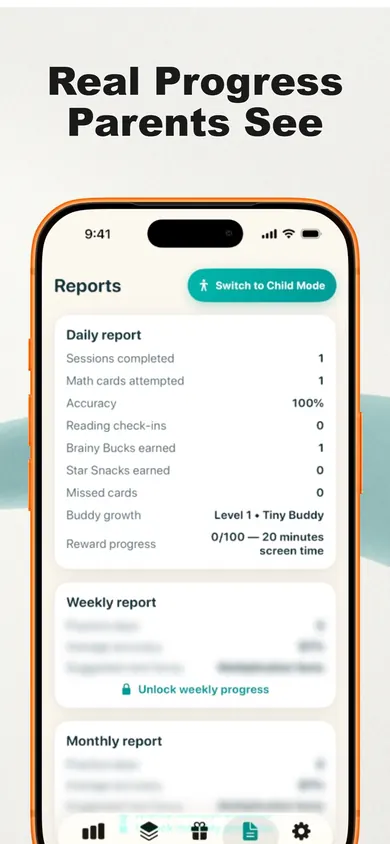
- Free every day: one adaptive Today's Quest, 3 extra quests, hints, second tries, spaced review, and the weekly summary and learning plan. Brainy Bucks Plus (monthly, yearly or lifetime) adds unlimited extra quests, the full practice library and weekly and monthly reports.
- iPhone only. Content runs Pre-K to Grade 8, deepest from Kindergarten to Grade 4.
- If facts still won't stick after several weeks of short practice, talk to your child's teacher. An app can't see what they see.
How Brainy Bucks spaces the practice, in 3 steps
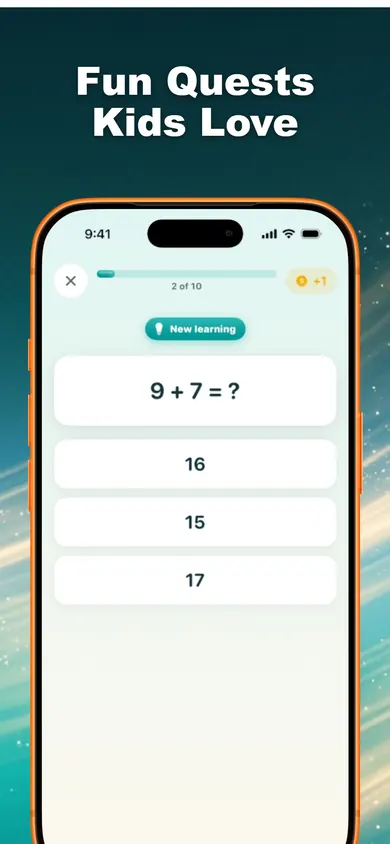
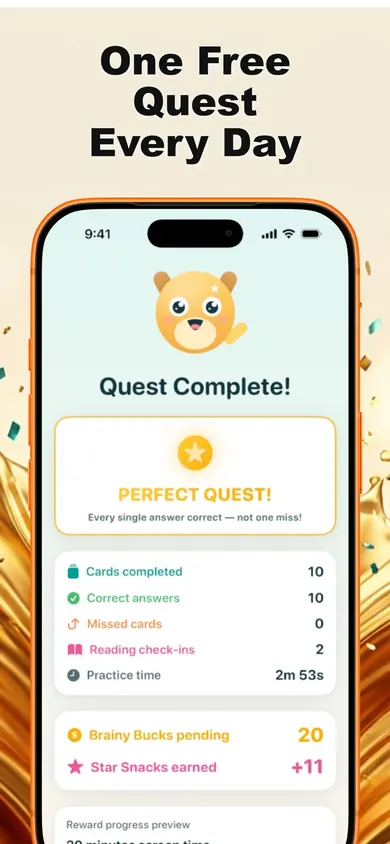
- 1A short quest each day. Today's Quest runs 5, 10 or 15 minutes and mixes new skills, review and earlier mistakes.
- 2Misses come back. A wrong answer gets a clue and a second try, then returns in a later quest.
- 3Wins get checked again. Skills that went well are rechecked days later, and the parent view shows statuses from Introduced to Retained or Needs review.
Questions parents ask about forgotten facts
Why does my child forget math facts so quickly?
Usually because the facts were practiced in one long session and then not used again for days. Memory fades without retrieval. A practice guide from the Institute of Education Sciences recommends spacing learning over time and using quizzes to re-expose students to key content (IES, 2007).
How do I help my child remember multiplication facts?
Keep it short and spread out: five to ten minutes on most days, starting each session with a few older facts before new ones. Mix facts rather than drilling one table at a time once your child knows several tables.
Is it normal for kids to forget math facts over the weekend?
Forgetting after a break is common, especially for facts that were learned recently. It is a sign the fact needs another few short reviews, not that your child cannot learn it.
Should I use timed tests to help my child remember?
Some children find timers motivating and some find them stressful. A quiz does not have to be timed to help: the IES guide's point is re-exposure through quizzing. If timing upsets your child, drop the clock and keep the quiz.
When should I talk to the teacher about math facts?
If your child still cannot recall facts after several weeks of short, regular practice, or if math homework regularly ends in tears, ask the teacher what they see in class. They can tell you whether it is a practice issue or something worth looking into further.
How does Brainy Bucks handle forgotten facts?
Missed questions come back in later quests, and skills that went well are checked again days later to see whether they were remembered. A wrong answer gets a clue and a second try, with no lives lost and no red X.
One week with the 7s (a story we wrote)
- Fri
The worksheet
She gets every 7s fact right on the Friday worksheet. Everyone relaxes. Nobody mentions math again all weekend.
- Mon
The blank
"What's 7 × 8?" Silence, then a guess: 54. She is not being lazy. The fact was learned once and never pulled out of memory since.
- Mon night
Five minutes
Instead of re-teaching the whole table, they do five minutes: three facts from last week, two new ones. That's it. Done before dinner.
- Tue
Yesterday's misses first
Each session starts with whatever went wrong last time. 7 × 8 comes back first. She gets it on the second try, with a hint.
- Wed
A day off
On purpose. Tomorrow's quick quiz is more useful if a little forgetting has happened in between.
- Thu
The mixed quiz
Not the 7s in order. A shuffle of 3s, 4s and 7s, the way they'll show up in real math. Two misses go on the list for Friday.
- Next Mon
The check
7 × 8 = 56, without a pause. The fact that was gone a week ago is the first one she answers.
The rhythm in this story is the one Brainy Bucks follows on its own. You can also do it with index cards and a kitchen timer.
What it looks like
A spaced week you can copy tonight
| Day | Five minutes of |
|---|---|
| Mon | 3 older facts, then 2 new ones |
| Tue | Yesterday's misses first, then the 2 new ones again |
| Wed | Rest |
| Thu | A mixed quiz: old and new facts shuffled |
| Fri | Thursday's misses, then 1 new fact |
| Sat–Sun | One real-life use: a recipe, a game score, coins |
| Next Mon | Check last week's new facts before anything else |
The structure follows the IES guide's two ideas, spacing and quizzing; the exact days are ours. One design decision we made in Brainy Bucks: rewards are earned only by practicing, and Child Mode shows no prices, so the habit is about the quest, not the shop.
Make it a habit with Brainy Bucks
One free adaptive quest a day, with forgotten facts brought back on purpose. Brainy Bucks on the App Store.

Updated November 2026. Source: IES practice guide (2007).
Related
- Brainy Bucks: a math and reading app for kidsA math and reading app for kids from Pre-K to Grade 8: one free adaptive quest a day, a weekly plan for parents, no ads, no accounts.
- How to add spiral review to homeschool mathKeep your mastery curriculum and add five minutes of mixed review a day. A worked spacing calendar for homeschool parents, from IES research.
- Do educational apps actually work? The 2-minute testA 2021 study of 124 kids' apps rated 58% lower quality. Tap through the four research questions that separate apps that teach from apps that entertain.
- Free math and reading apps for kindergarten, comparedFive kindergarten math and reading apps checked against their App Store listings, November 2026: what free really includes and who should pick which.