
You started a new topic
What is the biggest winter power outage risk for seniors?
Two of the most serious winter outage risks for an older adult at home are getting cold indoors and carbon monoxide from heating the house the wrong way. Both are quiet. Neither feels like an emergency until it already is. The National Institute on Aging (reviewed 2024) notes that even a mildly cool home of 60 to 65°F can lead to hypothermia in older adults, and the CDC (2026) lists gas ovens and indoor generators among the ways people poison themselves while trying to stay warm.
Everything else on an outage list (flashlights, batteries, water) matters, but these two are the ones parents argue with. So that is how we wrote this page: as the conversation you will probably have on the phone, one myth at a time.
Cold and carbon monoxide are the two outage risks that do not announce themselves.
How it works
How to make a winter outage plan in 3 steps
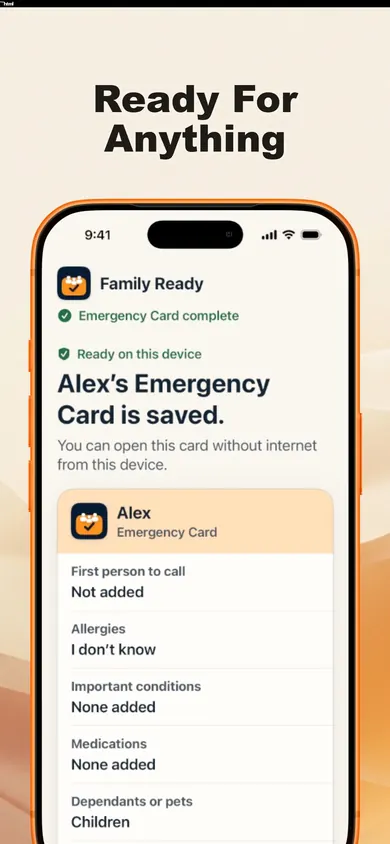
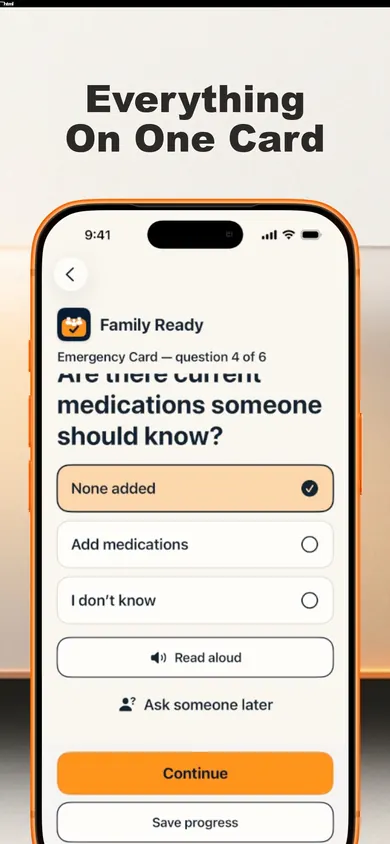
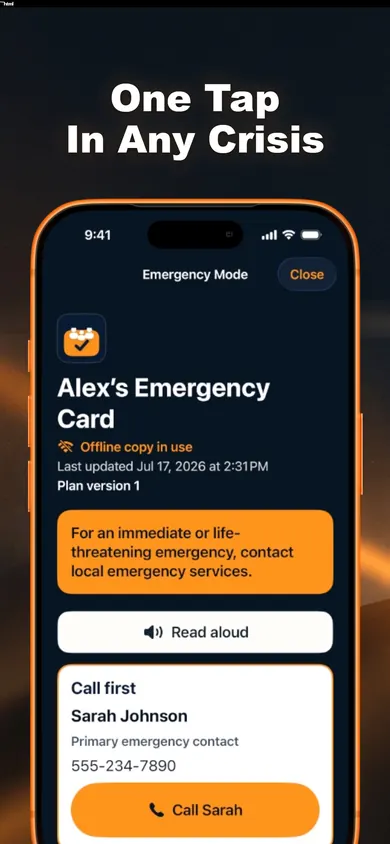
- Make the Emergency Card first. In Family Ready, answer the short questions: who to call first, allergies, current medications, important health information. It is free, it never needs a subscription, and it is saved on the iPhone so it opens in Emergency Mode without internet once you are past the lock screen.
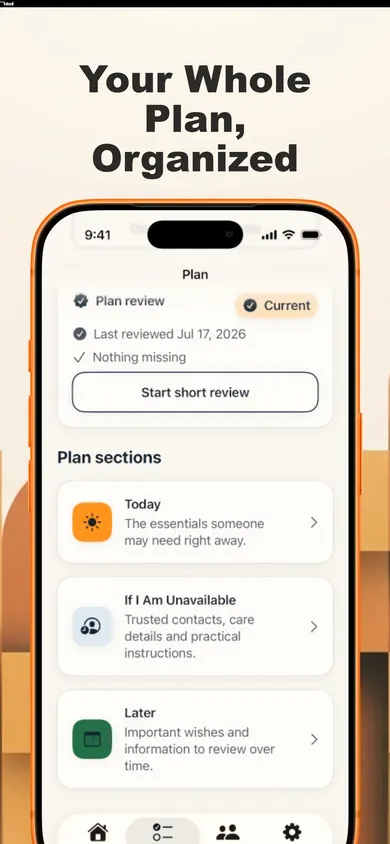
- Fill in the home and kit sections at your own pace. The household plan has plain sections for contacts, health, home, dependants and pets, and more. Skip what does not apply. The free kit checklist is based on Ready.gov and Get Prepared (Canada) guidance, with an optional older-adults section.
- Print it before the storm. The dated Emergency Snapshot PDF is free. Tape it inside a kitchen cupboard. The listing says it plainly and we agree: no app helps if a phone is lost or out of battery.
Try it
Build an outage-night note for your parent
Three questions. The note it writes uses only the facts sourced on this page. Copy it into a text, or onto paper by the phone.
Clocks went back on Sunday, November 1, 2026. The CDC uses each clock change as the cue to check CO detector batteries, so this week is a good week to ask.
Photos
What Family Ready looks like on the phone
Before you download
Who Family Ready is not for
- You want an alert when the power drops. Family Ready does not monitor anything or contact anyone. Your utility's outage alerts or a medical alert service do that job.
- Your parent uses an Android phone. Family Ready is iPhone only.
- You need someone else to see the plan live. Trusted-person invitations and household sync are part of Family Ready Plus, a monthly or annual subscription. The card, Emergency Mode, the household plan, the kit checklist, encrypted backup and the Snapshot PDF are free.
One design decision we made on purpose: Emergency Mode never calls anyone for you. You tap a contact to start the call yourself. A phone that dials on its own in a cold, dark kitchen is a phone that can call the wrong person.
Questions
Winter outage questions families ask
How do I keep an elderly parent warm during a winter power outage?
Layers, blankets, a hat, and one small room shut off to hold heat. The National Institute on Aging recommends heat of at least 68°F and warns that 60 to 65°F homes can lead to hypothermia in older adults. If the house cannot be kept warm, plan in advance where they will go: a relative, a neighbor, or a local warming center.
Is it safe to use a gas oven or stove for heat when the power is out?
No. The CDC says never heat your house with a gas oven, because of carbon monoxide poisoning.
How far from the house should a generator be?
Outdoors and more than 20 feet from windows, doors and vents, according to the CDC. Never in the house or garage, even with the doors open.
How long is food safe in the fridge without power?
Up to 4 hours for the refrigerator. A full freezer holds a safe temperature for about 48 hours, a half-full one about 24 hours if the door stays closed (FoodSafety.gov).
What are the signs of carbon monoxide poisoning in older adults?
The CDC lists headache, dizziness, weakness, upset stomach, vomiting, chest pain and confusion. In an older adult, confusion can be mistaken for tiredness, which is one more reason for working CO alarms. If you suspect carbon monoxide, get everyone outside to fresh air and call 911.
Does Family Ready warn me when the power goes out?
No. Family Ready organizes the information you enter. It does not monitor the power, contact anyone or call emergency services. What it does is keep your parent's Emergency Card on the iPhone so it opens offline in Emergency Mode once you are past the lock screen.
What should be on an outage note for a parent who lives alone?
Who to call first, how to reach the utility, the address of a warm place to go, current medications, and two or three safety rules written in plain words. The builder on this page makes a starting version you can copy and edit.
Start on your iPhone tonight
Make the free Emergency Card, print the Snapshot, and send the outage note before the next forecast. Family Ready on the App Store.

Updated November 2026 · Facts checked against CDC, NIA and FoodSafety.gov pages in November 2026. This is general safety information. In an emergency, call 911 or your local emergency number.
Related
- Family Ready: a family emergency plan on your iPhoneA family emergency plan you build at your own pace: a free offline Emergency Card, household plan sections and a kit checklist. Free on iPhone.
- Go bag checklist for seniors (myths fixed)A go bag checklist for seniors living alone, with 8 common packing myths checked against Ready.gov. Take the 3-tap quiz first.
- The 12-day emergency preparedness challengeOne small task a day, Dec 1-12, 2026, for older adults living alone and the grown kids who worry. Sourced to Ready.gov. Free to follow.
- Emergency preparedness quiz for seniorsSeven scratch cards built from Ready.gov's advice for older adults. Scratch to see why each matters, answer, and get a short to-do list.