
What should a senior's go bag have in it?
A senior's go bag should hold medicines and medical supplies, spare glasses, hearing aid batteries and chargers, copies of Medicare and insurance cards, ID, cash, a flashlight, a whistle and a change of clothes, and it should be light enough to carry alone.
Most of that list comes straight from Ready.gov's page for older adults (updated 2024) and its basic kit list. The part people get wrong is not what to pack. It is the beliefs around packing, which is why this page starts with myths.
Who this checklist is not for
If you use oxygen, dialysis or another powered medical device, your care team's plan comes first: Ready.gov (2024) says to find out the emergency plans of any clinic or hospital that gives you routine treatment. If you live in assisted living or a care home, ask staff for the building's evacuation plan before packing anything. And if you want someone to watch over you around the clock, a medical alert service does a job that no checklist or app can.
Family Ready, for the paper side of the bag
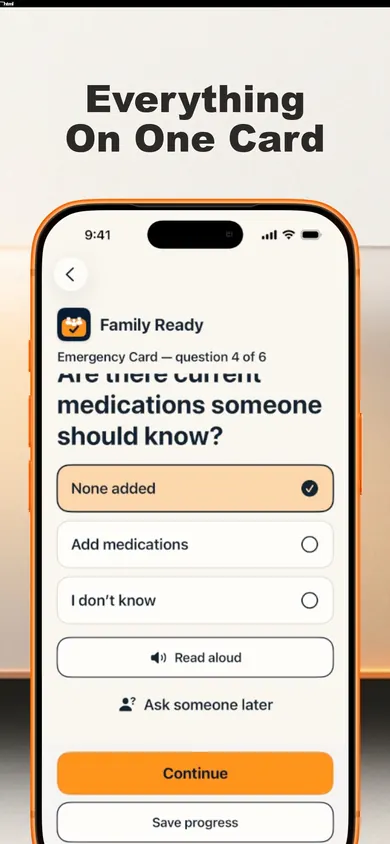
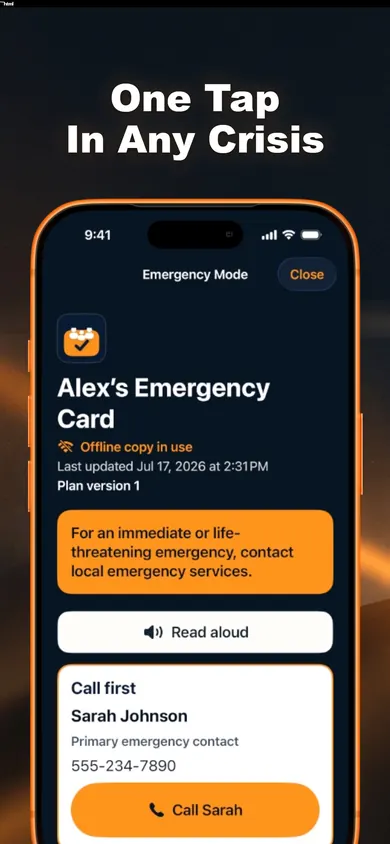
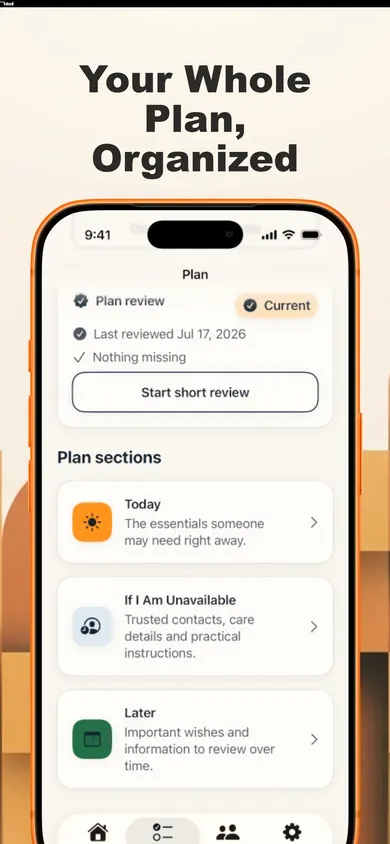
The app also includes a free, editable kit checklist based on Ready.gov and Get Prepared (Canada) guidance, with an optional section for older adults. It is not shown in these store screenshots.
8 go bag myths, fixed
MythA go bag is just a smaller version of the home kit.
FactThey do different jobs. Ready.gov describes a home kit kept in a designated place, ready if you have to leave quickly. The go bag is the part of it you can actually carry out the door by yourself. Ready.gov
MythWater should be the heaviest thing in the bag.
FactReady.gov's one gallon per person per day is for a several-day home supply. A gallon weighs about 8.3 pounds. Carry a few bottles; leave the jugs at home. Ready.gov
MythMy pills are in the cabinet. I'll grab them on the way out.
FactReady.gov's older-adults page (2024) puts medicines, medical supplies, batteries and chargers in the kit itself. Ask your pharmacist how to keep a small rotating supply. Ready.gov, 2024
MythMy insurance cards are in my wallet, so I'm covered.
FactWallets get left behind. Ready.gov (2024) says to make copies of Medicaid, Medicare and other insurance cards, and its kit list adds documents in a waterproof, portable container. Ready.gov, 2024
MythI'll sort out a ride when it happens.
FactIf you would need help to evacuate, Ready.gov (2024) says to plan your transportation in advance, and to plan how your assistive devices come with you. Ready.gov, 2024
MythLiving alone means nobody else needs a key.
FactThe opposite. Ready.gov (2024) suggests a support network of family, friends and others, and at least one person in it with an extra key to your home. Ready.gov, 2024
MythMy phone has everything I need.
FactPack a charger and a backup battery, as Ready.gov's kit list says. And keep a paper copy of your key information: no app helps when the phone is lost or flat. We say the same thing about our own app. Ready.gov
MythOnce it's packed, it's done.
FactReady.gov says to replace expired items as needed and re-think your needs every year. Put the check on the calendar on a date you'll remember. Ready.gov
If you can't carry it, it isn't a go bag. It's a closet.
The go bag checklist for seniors, with sources
| Item | Where it comes from |
|---|---|
| Medicines and medical supplies | Older-adults page (2024) |
| Spare glasses, hearing aid batteries, device chargers | Kit list; older-adults page |
| Copies of Medicare, Medicaid and insurance cards | Older-adults page (2024) |
| ID and documents in a waterproof pouch | Kit list |
| Phone charger and backup battery | Kit list |
| Flashlight, extra batteries, whistle | Kit list |
| First aid kit | Kit list |
| Cash | Kit list |
| Change of clothes and sturdy shoes | Kit list |
| A few bottles of water and snacks you can open | Kit list (home supply is larger) |
| Pet or service animal food and water | Older-adults page (2024) |
| Paper list of contacts and medicines | Our addition: a backup for the phone |
One design decision we made in Family Ready: the kit checklist is editable, because "rural home with a dog" and "third-floor apartment with a walker" should not get the same list.
How to build your go bag in 3 steps
- Fill in your Emergency Card first. Who to call first, allergies, conditions and medicines. Print the free Emergency Snapshot PDF and put it in the bag.
- Pack from the kit checklist. Tick the older-adults section, skip what doesn't apply, and weigh the bag by carrying it to the front door.
- Set a review. Pick 3, 6 or 12 months in Family Ready. Optional reminders, important-date tracking and guided reviews are part of Family Ready Plus (monthly or annual); the card, Emergency Mode, kit checklist and Snapshot PDF are free.
The bag by the back door (a story we wrote)
She is 78, lives alone on one floor, and packed a bag last spring after a storm warning. In November her daughter visits and they open it together. The water jugs make it too heavy to lift. One blood pressure medicine was changed in July and the old bottle is still in there. The flashlight batteries are dead.
They swap the jugs for four small bottles, update her Emergency Card with the new medicine, print a fresh Snapshot for the front pocket, and give the neighbor across the hall a spare key. The bag now weighs less than a bag of groceries. Next review: May.
Go bag questions, answered
What should a senior pack in a go bag?
Start with medicines and medical supplies, spare glasses and hearing aid batteries, chargers, copies of Medicare and insurance cards, ID, cash, a flashlight, a whistle, a first aid kit and a change of clothes. That list follows Ready.gov's page for older adults (2024) and its kit list.
How heavy should a go bag be?
Light enough that you can carry it out of the house alone, without help, on a bad day. Pack it, then walk to the car with it. If it is too heavy, take out water first and keep the rest of the water at home.
Where should I keep my go bag?
Somewhere you pass on the way out, not in the attic. Ready.gov says to keep the kit in a designated place, ready in case you have to leave your home quickly.
How do I pack medications in a go bag?
Ready.gov (2024) says to include medicines and medical supplies. How many days you can keep on hand depends on your prescriptions and insurance, so ask your pharmacist or doctor how to keep a small rotating supply and a current list.
How often should I check my go bag?
At least once a year, plus whenever a medicine changes. Ready.gov says to replace expired items and re-think your needs every year.
Does Family Ready pack the bag or send alerts?
No. Family Ready gives you an editable kit checklist and an Emergency Card you fill in. It does not monitor anything, send weather alerts or contact emergency services.
Start on your iPhone
Make your free Emergency Card, then pack from the kit checklist. Family Ready on the App Store.

Family Ready organizes information you enter. It is not an emergency-response, medical or monitoring service. In an emergency, call your local emergency number.
Updated November 2026. Sources: Ready.gov older adults (2024) and kit list.
Related
- Family Ready: a family emergency plan on your iPhoneA family emergency plan you build at your own pace: a free offline Emergency Card, household plan sections and a kit checklist. Free on iPhone.
- Pet emergency kit checklist you can tick offA free pet emergency kit checklist from Ready.gov guidance: tick items, watch the ring fill, and see what is still missing for your dog or cat.
- Winter power outage safety for seniors: 7 mythsSeven winter power outage myths older parents believe, each flipped with a CDC, NIA or FoodSafety.gov fact, plus an outage-night note you can build.
- The 12-day emergency preparedness challengeOne small task a day, Dec 1-12, 2026, for older adults living alone and the grown kids who worry. Sourced to Ready.gov. Free to follow.