How do I help my child learn to read in English if I am still learning it?
Split the job: you bring the routine, the talking and your home language, and a read-aloud voice brings the English pronunciation, for about ten minutes a day. You do not have to sound like a teacher. You have to show up at the same time each day and ask, "What do you think happens next?"
The words above are a taste of what makes English hard: said, was and they do not sound the way they look. Children meet these in their first school books. A parent who is unsure of them can still sit beside the child while a voice reads them. Your job is the sitting beside.
Proof screenshots, marked up
We make Brainy Bucks, so take these notes as ours. The marker circles show what matters for a family reading in a second language.
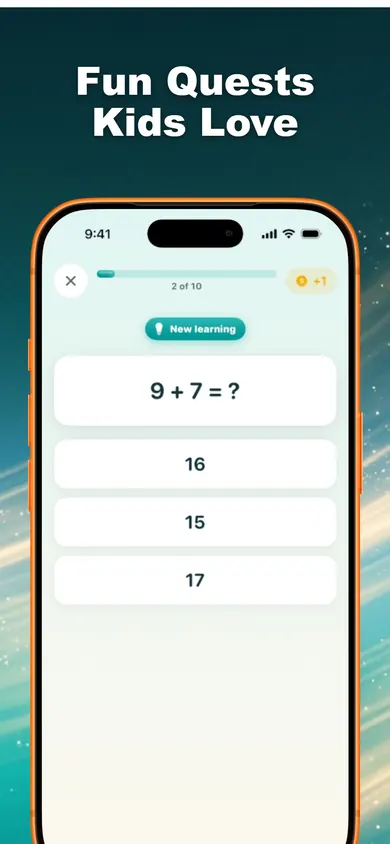
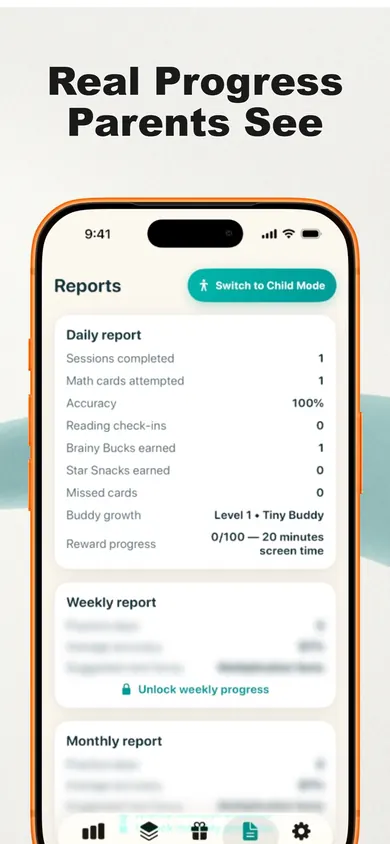
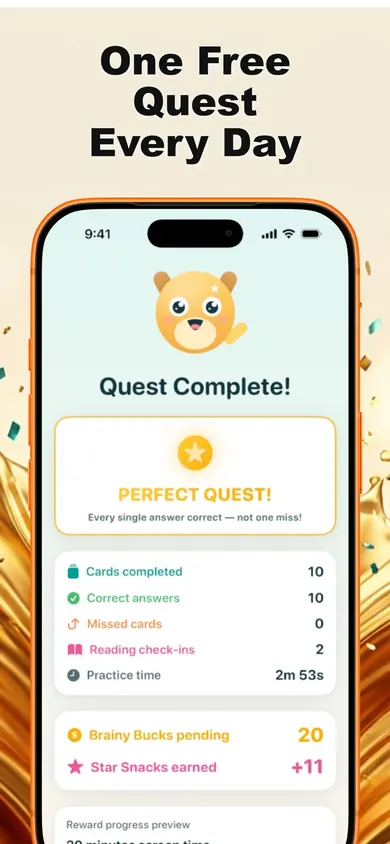
Questions from parents of English learners
Can I help my child read in English if my English is not good?
Yes. You can read and tell stories in your strongest language, talk about pictures, ask what happened next, and keep a short daily routine. Let a read-aloud voice handle the English pronunciation while you handle the encouragement.
Should we speak our home language at home?
Many families do, and research gives no reason to stop. The National Research Council's 1998 report found evidence, which it called far from conclusive, that early reading instruction in a child's home language helps literacy in both that language and English.
How many minutes a day should we practice?
Short and daily beats long and rare. Colórin Colorado suggests reading aloud for at least 20 minutes a day; a 10-minute practice quest can sit next to that, not replace it.
Does Brainy Bucks read the questions out loud?
Yes. Tap the speaker to hear any question and its answer choices. Read-aloud runs on the device and works offline.
Is Brainy Bucks available in Spanish or other languages?
The App Store listing describes English content only. The app does not translate questions into your home language, which is why we suggest pairing it with books in that language.
Is Brainy Bucks free?
One adaptive Today's Quest is free every day, plus 3 extra quests a day, hints, second tries, spaced review and the weekly summary. Brainy Bucks Plus (monthly, yearly or lifetime) adds unlimited quests, the full practice library and more reports.
How it works in 3 steps
- Ten minutes, same time. After dinner works for many families. Today's Quest can be set to 5, 10 or 15 minutes and mixes phonics, rhyming, sight words and vocabulary with a little math.
- Let the speaker read, you cheer. Read-aloud works on the device and offline. A wrong answer gets a clue and a second try, with no red X and no lives lost, so nobody feels tested in front of their parent.
- Then put the phone down and talk. Brainy Bucks includes screen-free parent-and-child activities with steps and easier or harder versions. Do one in English or in your home language.
What research says about your home language
Many parents worry that speaking their own language at home will slow down English. The National Research Council's Preventing Reading Difficulties in Young Children (1998), excerpted by Reading Rockets, found evidence it called "far from conclusive" that early reading instruction in a child's home language contributes to literacy in both the home language and English. The same report notes that knowing how to speak English makes it easier to learn to read English, which is why talking matters as much as reading.
For parents still learning English, Colórin Colorado (WETA, 2020, updated 2023) suggests sharing family stories, using descriptive words in everyday conversation, and reading aloud for at least 20 minutes a day. The U.S. Department of Education's English Learner Family Toolkit comes in English, Arabic, Chinese and Spanish and has a chapter on supporting your child's literacy.
- Read picture books in your home language; talk about them in any language.
- Point at English words on cereal boxes and street signs. Ask your child to read them to you.
- Ask the teacher which sight words the class is learning this month.
- Celebrate effort out loud: "You tried that word twice!"
Honest limits
- English only. The app does not translate into your home language.
- Not a formal assessment. Skill statuses (Introduced, Practicing, Consistent, Retained, Needs review) come only from answers given in the app.
- Free has a ceiling. One adaptive quest and 3 extra quests a day are free; the full practice library, unlimited quests and monthly reports need Plus.
- Not a teacher. If you worry your child is behind, ask the school about English learner support; that is their job and your right.
One design decision we made for families like yours: Child Mode shows no prices or purchase buttons, and purchases sit behind a parent PIN. A child reading alone should never meet a sales pitch they cannot read.
Comparison strip: three ways to practice English reading at home
Library storytime
Free, social, a real voice. Weekly at best, and you cannot replay a word.
Books in your language
Builds talk, love of stories and background knowledge. Does not teach English sounds.
A read-aloud app
Daily, patient, replays any word. Screen time, and it only knows what it was built to ask.
The best week uses all three: one library visit, books in your language, and ten minutes of read-aloud practice a day.
Ten minutes tonight
Make it a habit with Brainy Bucks: one free quest a day, read aloud, with you sitting beside.

Make it a habit with Brainy Bucks
Updated November 2026.
Related
- Brainy Bucks: a math and reading app for kidsA math and reading app for kids from Pre-K to Grade 8: one free adaptive quest a day, a weekly plan for parents, no ads, no accounts.
- Free reading help for kids near me: 3-tap pickerFive kinds of free reading help for kids compared, from your school to apps at home. Answer three taps to see which to try first.
- When your child keeps forgetting math factsAced it Friday, blank by Monday? Why kids forget math facts, what a federal research guide recommends, and a one-week story of fixing it.
- Do educational apps actually work? The 2-minute testA 2021 study of 124 kids' apps rated 58% lower quality. Tap through the four research questions that separate apps that teach from apps that entertain.